District Planning in Action: Lessons from Across Air Force Installations
Introduction
Air Force installations are evolving faster than ever. Missions shift, technologies advance, and infrastructure must keep pace with growing demands. As these dynamics accelerate, the need for planning tools that connect big-picture vision to day-to-day operations becomes more important. District planning provides that connection by offering a clear path from understanding current capabilities to identifying the actions and investments needed to support future missions. It ties long-term goals directly to practical, implementable projects that strengthen mission readiness.
TSG has supported district planning efforts across Air Force installations since the earliest rollout of the District Planning Playbook, partnering closely with AFCEC to refine and implement a process that is now standard across the enterprise. Our work on more than 30 district plans in recent years has helped installations turn strategy into clear, sequenced projects.

What District Planning Is — and Why It Matters
District planning serves as the crucial bridge between high-level Installation Development Plans (IDPs) and the real projects that installations must execute to remain mission ready. While IDPs establish strategic goals, they typically lack detail for implementation. District planning closes that gap by providing:
Fence-to-fence planning, grounded in the District Planning Playbook
A standardized, repeatable process that works across installations
A clear asset management mindset, focusing on what installations have, what they need, and how to transition from one to the other
A direct link between mission capability gaps (MCGs) and actionable projects, ensuring planning decisions directly support operational requirements
The Playbook structure — Pre-Planning, District Analysis, Alternatives Analysis, and Plan Documentation — creates consistent expectations and a clear roadmap for implementation. This is planning that drives action.
AFCEC’s district planning approach is not just another planning exercise. It is built around a standardized framework that is consistent across installations, but flexible enough to respond to mission-specific needs. District plans do not sit on a shelf; they are working tools used by planners, programmers, and leadership to make decisions in dynamic contexts. Because the process is grounded in the District Planning Playbook, installations benefit from shared language and methodology. That consistency allows lessons learned at one installation to inform solutions at another, strengthening the entire enterprise.


Common Themes Across District Planning
Across dozens of installations, including Creech, Sheppard, Edwards, Holloman, Moody, and Shaw, district planning has consistently revealed similar challenges with very different operational impacts. At flightline and maintenance districts, inefficiencies in facility layout and aging infrastructure directly affect sortie generation and maintenance timelines. In industrial and support areas, decades of incremental development often result in fragmented workflows and underperforming facilities.
TSG has identified recurring themes that shape how installations function and how they need to evolve:
Infrastructure gaps are mission risks. Utilities, pavements, and facilities directly affect readiness.
Facility configuration matters more than square footage. Effective planning enhances adjacency, accessibility, and operational relationships.
Sustainment realities shape the future. Maintenance and operations data reveal long-term priorities better than any single facility metric.
Incremental construction accumulates complexity. Without a long-term spatial strategy, installations inherit inefficiencies and poor adjacencies. District planning helps reorganize these areas into more logical, mission aligned configurations.
Stakeholder input is essential. Planners, programmers, and operators all shape the feasibility of future solutions.
Planning without implementation pathways limits impact. Plans must connect directly to programming and execution.
Each of these themes helps ground district plans in pressing operational needs.
District planning brings these issues into focus and provides a path forward. By aligning infrastructure improvements with mission needs, installations gain clarity on where to invest and how to phase improvements over time.

How District Planning Turns Strategy into Programs
One of the most important functions of district planning is translating mission capability gaps (MCGs) into actionable solutions. The result is a roadmap that supports leadership decisions, investment strategies, and long-term mission strength.
TSG supports district planning from initial data collection through final documentation and programming alignment. Our role often includes:
Synthesizing large volumes of data, including 7115/BUILDER datasets, GIS, and stakeholder input
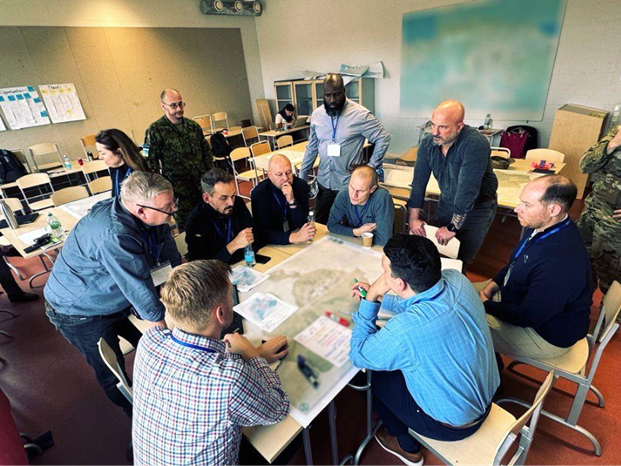
Facilitating workshops and charrettes that bring together planners, operators, and engineers
Developing and testing alternatives that balance mission needs, constraints, and cost
Translating preferred alternatives into clear, program-ready project lists
This end-to-end involvement ensures that plans are not only technically sound, but also actionable and aligned with how installations operate.

What Makes District Planning Effective
Effective district plans share three core attributes:
A clear connection to mission priorities: Every recommendation should move the installation closer to its operational goals.
Realistic and implementable solutions: District planning must be grounded in site constraints, funding realities, and stakeholder expectations.
Flexibility to support future missions: Installations change. A strong plan guides growth while remaining adaptable.
TSG’s planning methodology emphasizes clear alternatives and supporting graphics that make complex choices easier for decision makers to understand and act on.

The Regulating Plan: The Backbone of District Planning
The Regulating Plan is the central output of every district plan. It provides:
Parcel-level development direction
A unified spatial strategy that outlasts leadership changes
A consistent reference point for planners and programmers
A mission-aligned guide for evaluating future projects
Regulating plans are essential tools for installations seeking clarity and consistency in long-term development.

Looking Ahead: The Future of District Planning — and How to Get Involved
As installations face increasing mission demands, aging infrastructure, and rapid technological change, district planning is becoming even more important. The process is moving toward closer alignment with programming, faster timelines from planning to action, and a stronger focus on resilience and adaptability.
At the same time, installations are asking for clearer, more practical guidance that works in complex, dynamic mission contexts. A strong district plan is easy to understand, user-friendly, and directly tied to decision-making. It clearly communicates existing conditions, defines MCGs in a way that resonates with stakeholders, and presents realistic, forward-looking alternatives. Most importantly, it results in a plan that installations can act on — one that supports programming, guides development, and stays relevant as missions evolve.

Your Next Step
TSG welcomes collaboration with teams across the industry who are committed to delivering plans that are actionable, consistent, and mission-first. Whether you are working through district planning at your installation or looking to strengthen the connection between planning and programming, we are always open to sharing lessons learned and approaches that have worked across the enterprise. Let’s build the future of installation planning together.


Comments